Delivering AI Insights for Google Ad Sales & Customers
Unlocked new channels of communication with embedded AI insights, to drive deeper sales customer engagement, meeting small business owners where they communicate with tailored pitches, driving millions in efficiency savings and incremental revenue
COMPANY
Google Ads, Connect Sales Platform
Location
Mountain View, CA • San Francisco, CA • Bangalore, India
Year
2023-2025
ROLE & TEAM
Design Manager w/ 6 directs & lead directing 15+ UX across 3 platforms
Overview
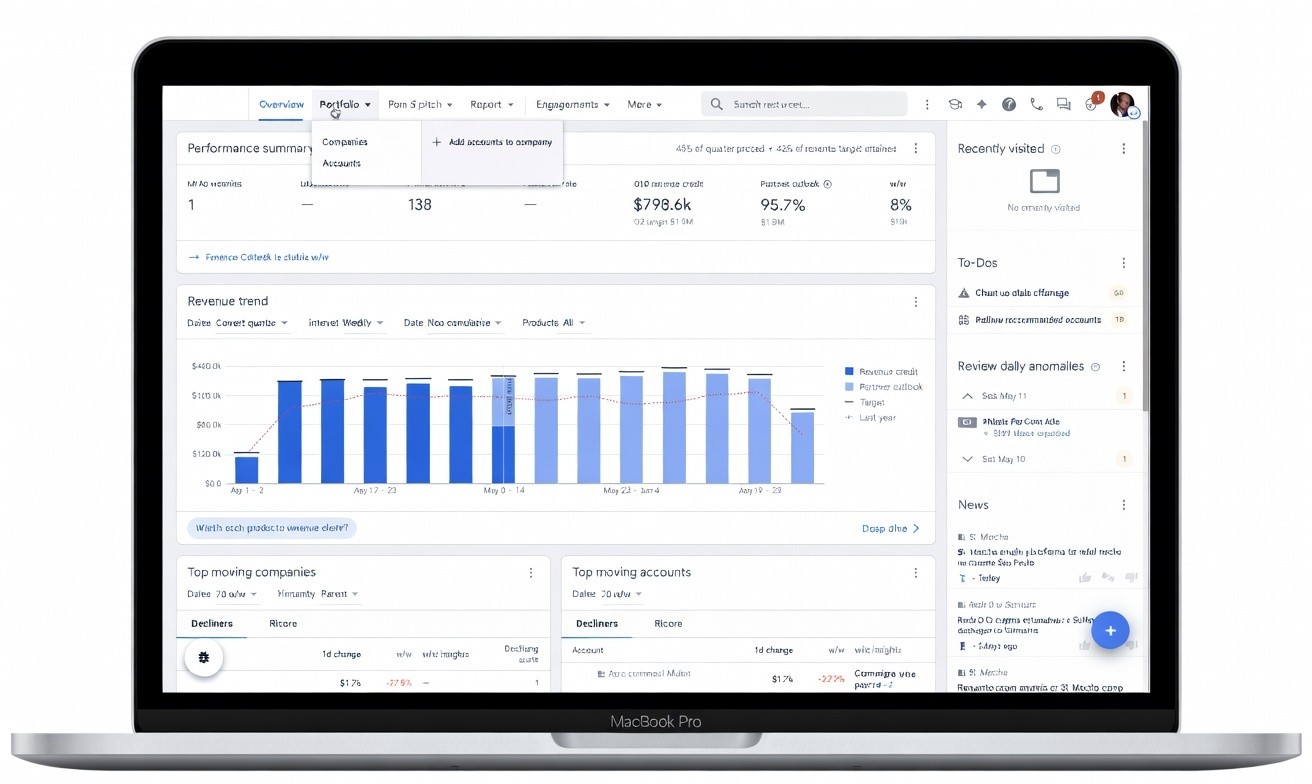
Google’s Sales Platform facilitates billions of interactions between sellers and ads customers monthly, responsible for $###M+ in annual revenue for Google. Sale Platform owns Connect Sales, the main CRM and hub for seller-customer interactions, as well as designing experiences to deliver customer insights and assistance everywhere sellers work with customers, across Google tools like Meet, Email, Mobile, and ecosystem partner teams managing things like sales event invites.
As Sales Platform sought to rapidly scale new channels of seller-customer communication (e.g. WhatsApp, 1p chat, integrated voice) and introduce new AI capabilities and insights in those channels, fragmented product teams were deploying inconsistent "black box" AI features without unifying guidelines or collaboration in approach to channel delivery, leading to confused sellers, and customers who felt their needs were not being heard. Our designers, product, and engineering partners were pretty bummed out, too.
Overview
Google’s Sales Platform facilitates billions of interactions between sellers and ads customers monthly, responsible for $###M+ in annual revenue for Google. Sale Platform owns Connect Sales, the main CRM and hub for seller-customer interactions, as well as designing experiences to deliver customer insights and assistance everywhere sellers work with customers, across Google tools like Meet, Email, Mobile, and ecosystem partner teams managing things like sales event invites.
As Sales Platform sought to rapidly scale new channels of seller-customer communication (e.g. WhatsApp, 1p chat, integrated voice) and introduce new AI capabilities and insights in those channels, fragmented product teams were deploying inconsistent "black box" AI features without unifying guidelines or collaboration in approach to channel delivery, leading to confused sellers, and customers who felt their needs were not being heard. Our designers, product, and engineering partners were pretty bummed out, too.
My role
As Design Manager and Area Lead across Communications and new AI Initiatives tracks was to operate as a player-coach and design facilitator to unite Sales, Support, and Sales Ecosystem product teams and lead overarching UX strategy for AI insight delivery. Beyond my direct team, I gathered 15+ UX tiger team friends across platforms to research our on seller/customer needs, design new patterns for AI, and establish strategy, collaborating with senior product leadership to define and secure product investments for high and low-touch sales groups.
From this work and my authorship on the Channels and AI strategy papers, I was tasked to lead a team of 6+ relatively junior UX (<2 years tenure) to deliver multiple AI-powered features everywhere Sales works, including efforts for assisted email creation in GMail, Sales Coaching powered by transcript insights, live objection-handling in Google Meet, and more.
My role
As Design Manager and Area Lead across Communications and new AI Initiatives tracks was to operate as a player-coach and design facilitator to unite Sales, Support, and Sales Ecosystem product teams and lead overarching UX strategy for AI insight delivery. Beyond my direct team, I gathered 15+ UX tiger team friends across platforms to research our on seller/customer needs, design new patterns for AI, and establish strategy, collaborating with senior product leadership to define and secure product investments for high and low-touch sales groups.
From this work and my authorship on the Channels and AI strategy papers, I was tasked to lead a team of 6+ relatively junior UX (<2 years tenure) to deliver multiple AI-powered features everywhere Sales works, including efforts for assisted email creation in GMail, Sales Coaching powered by transcript insights, live objection-handling in Google Meet, and more.
Impact
By championing user-first empathy and research and collaborative design, my team successfully aligned complex cross-functional stakeholders across 10+ teams, authored cross-Google AI design standards for Enterprise and delivered multiple AI-powered features driving:
$###M in incremental annual revenue through deeper, more effective pitches
### headcount savings driven from increases in efficiency
80+% customer CSAT averaged across AI/comms experiences meeting high platform bar
Enterprise AI Playbook founded new AI patterns (e.g. explainability, feedback), 465+ unique views x-Google, leveraged for 10+ features, impacting far beyond Sales Platform
Let's dive in to explore the journey and some of our approaches…
Impact
By championing user-first empathy and research and collaborative design, my team successfully aligned complex cross-functional stakeholders across 10+ teams, authored cross-Google AI design standards for Enterprise and delivered multiple AI-powered features driving:
$###M in incremental annual revenue through deeper, more effective pitches
### headcount savings driven from increases in efficiency
80+% customer CSAT averaged across AI/comms experiences meeting high platform bar
Enterprise AI Playbook founded new AI patterns (e.g. explainability, feedback), 465+ unique views x-Google, leveraged for 10+ features, impacting far beyond Sales Platform
Let's dive in to explore the journey and some of our approaches…
Background
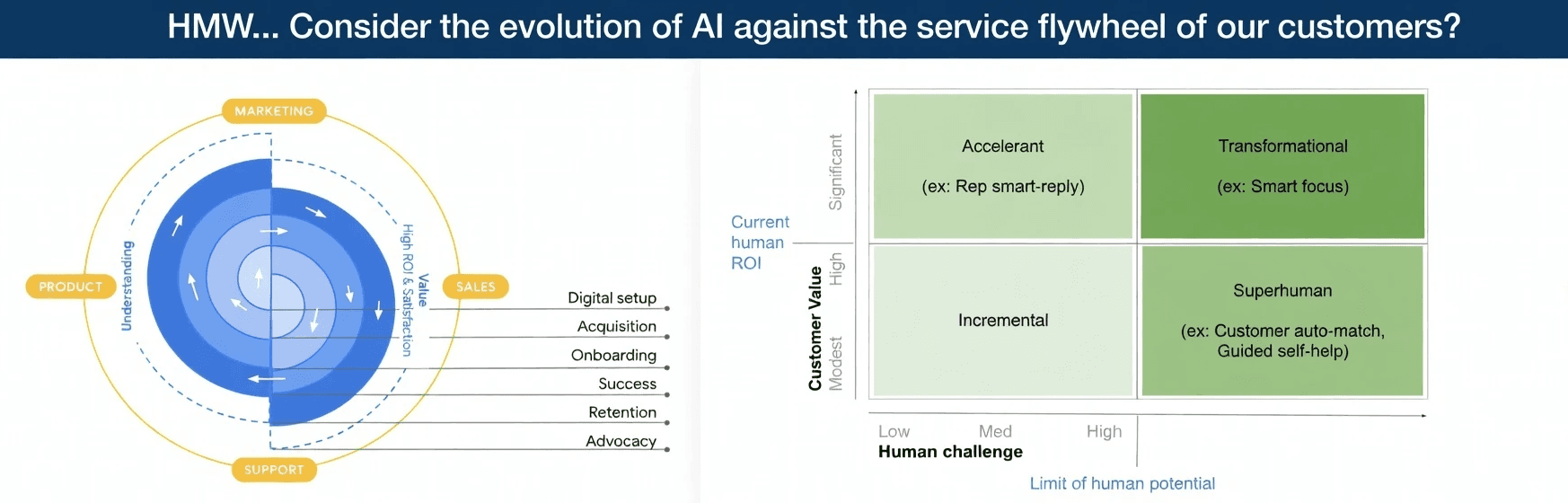
Sales Platform sought to support sellers meeting customers everywhere they worked, understanding the service design needs of customers onboarding, setting up, growing their business, and troubleshooting. At the same time, the power of AI was growing, moving from incremental value to truly transformational changes in sales-customer engagements (read our Case Study for more background).
For the UX team, designing new patterns to scale an intelligent, multi-channel ecosystem for tens of thousands of Google sellers presented four user experience hurdles:
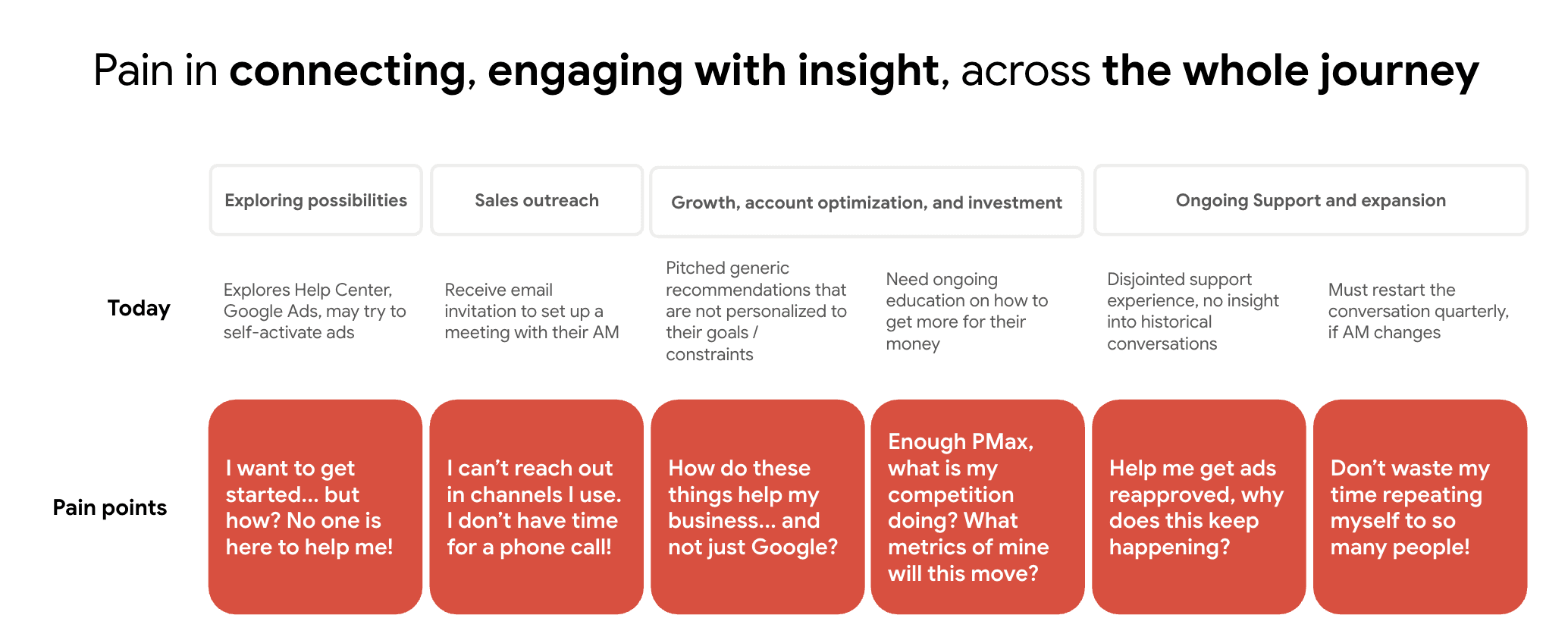
Disjointed, High-Friction Communications: Historically, our platform forced customers into rigid, Google-preferred communication channels (like emails or scheduled meetings) rather than meeting customers where they were. Busy small-to-medium business owners don’t have time to chat on the phone or log into a portal to fix an ad approval issue: they want to text via WhatsApp, LINE, or SMS. Because sellers were trapped in legacy systems, response times lagged, and sellers lacked the real-time insights necessary to drive strategic, personalized conversations with customers.
Cognitive Overload from Emergent, Fragmented AI Experiences: As AI permeated the platform, the UI became a chaotic landscape of distracting gradients, "sparkles", and inconsistent, hype-driven names (e.g., "Smart Pitch Nurse") distracting sellers from vital customer data, eroding trust, and leaving sellers unsure how new tools fit in.
Explainability vs. Information Overload: Sellers often handle high-value clients where AI hallucination could cost millions. Legacy approaches to mitigating risk blanketed the UI in warnings, paralyzing seller workflows with risk of alert fatigue and information blindness. Conversely, hiding AI limitations in fine print created massive risk. We needed a UX paradigm that help sellers understand value and limitations, while empowering sellers to correct where needed as "experts-in-the-loop."
Chat Framework Architectural Tradeoffs: To deliver insights in new channels of communication like embedded chat, we faced a critical UX architecture decision: Build a centralized "Chat Console" or persistent "Chat Moles". A console was easier and faster to build, but stripped sellers of context. We needed to evaluate UX approach in concert with build: a 3P solution, sharing Support-side chat infra, or a custom build, including tradeoffs and politics across teams.
Background
Sales Platform sought to support sellers meeting customers everywhere they worked, understanding the service design needs of customers onboarding, setting up, growing their business, and troubleshooting. At the same time, the power of AI was growing, moving from incremental value to truly transformational changes in sales-customer engagements (read our Case Study for more background).
For the UX team, designing new patterns to scale an intelligent, multi-channel ecosystem for tens of thousands of Google sellers presented four user experience hurdles:
Disjointed, High-Friction Communications: Historically, our platform forced customers into rigid, Google-preferred communication channels (like emails or scheduled meetings) rather than meeting customers where they were. Busy small-to-medium business owners don’t have time to chat on the phone or log into a portal to fix an ad approval issue: they want to text via WhatsApp, LINE, or SMS. Because sellers were trapped in legacy systems, response times lagged, and sellers lacked the real-time insights necessary to drive strategic, personalized conversations with customers.
Cognitive Overload from Emergent, Fragmented AI Experiences: As AI permeated the platform, the UI became a chaotic landscape of distracting gradients, "sparkles", and inconsistent, hype-driven names (e.g., "Smart Pitch Nurse") distracting sellers from vital customer data, eroding trust, and leaving sellers unsure how new tools fit in.
Explainability vs. Information Overload: Sellers often handle high-value clients where AI hallucination could cost millions. Legacy approaches to mitigating risk blanketed the UI in warnings, paralyzing seller workflows with risk of alert fatigue and information blindness. Conversely, hiding AI limitations in fine print created massive risk. We needed a UX paradigm that help sellers understand value and limitations, while empowering sellers to correct where needed as "experts-in-the-loop."
Chat Framework Architectural Tradeoffs: To deliver insights in new channels of communication like embedded chat, we faced a critical UX architecture decision: Build a centralized "Chat Console" or persistent "Chat Moles". A console was easier and faster to build, but stripped sellers of context. We needed to evaluate UX approach in concert with build: a 3P solution, sharing Support-side chat infra, or a custom build, including tradeoffs and politics across teams.
Investigations
To halt proliferation of fragmented AI experiences and define needs across enterprise teams, I created an overarching UXR plan, defined key questions, and rallied a tiger team across platforms to drive:
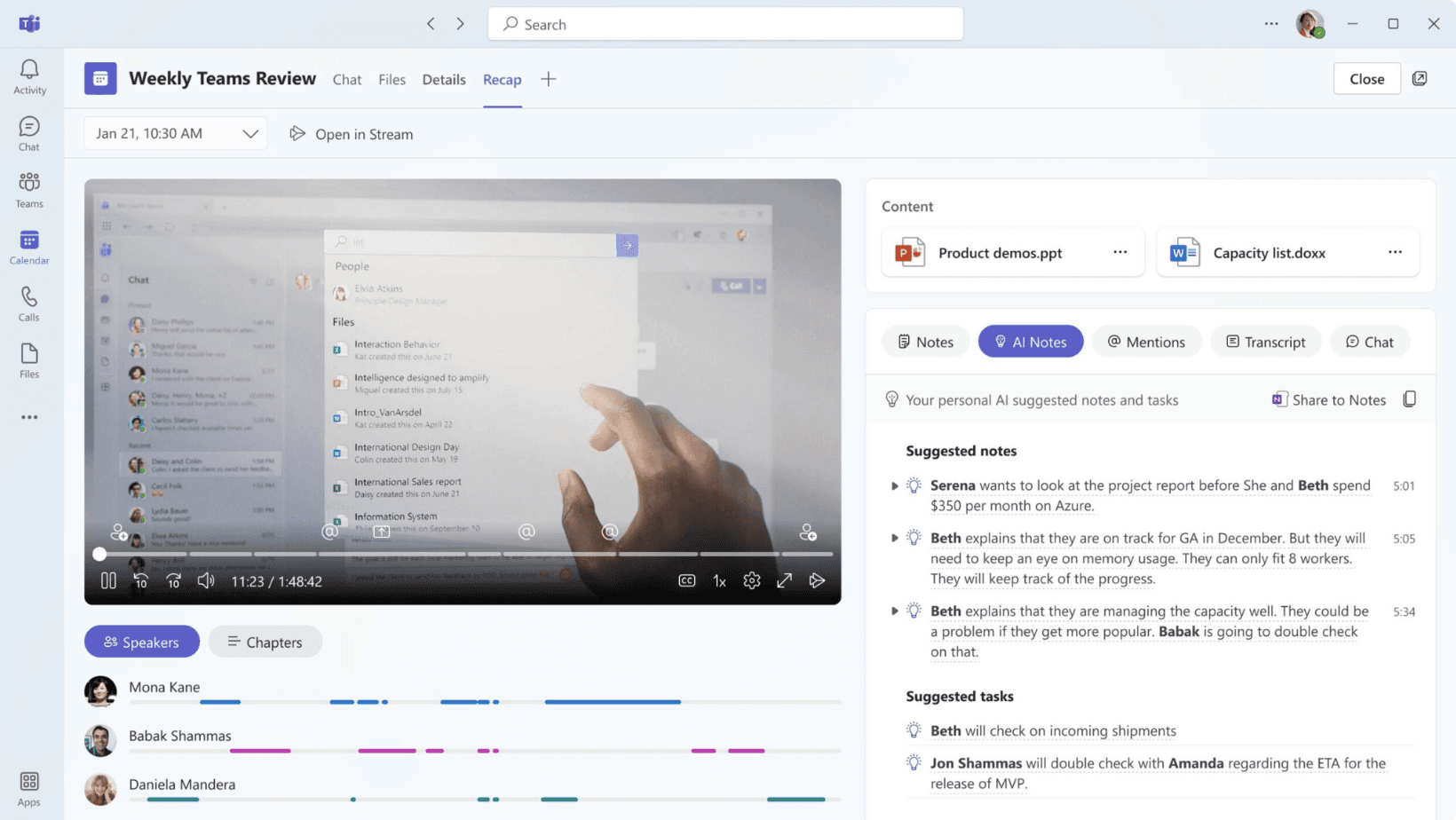
System explorations: I guided the team auditing 20+ cross-Google AI projects in a broad heuristic evaluation, finding inconsistencies and opportunities to align in naming, branding, explainability, and more. Our team dove deep on competitive analysis of other enterprise systems like Microsoft Copilot exploring patterns, copy, onboarding, explainability, feedback patterns, and more.
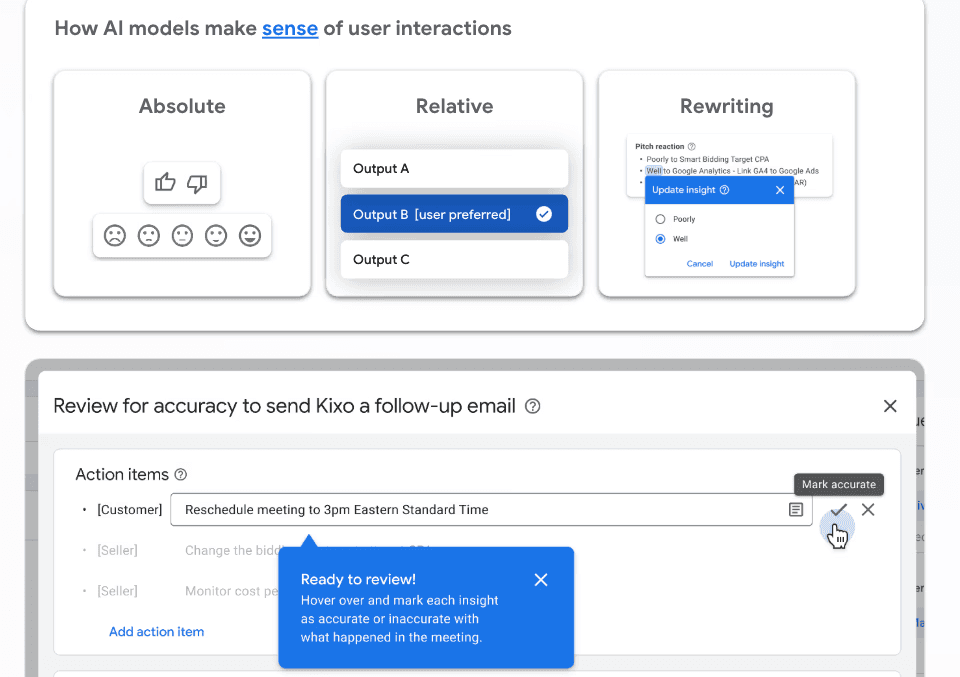
Data deep-dives: Our team analyzed millions Connect Sales sessions finding useful insights — for instance legacy feedback patterns (thumbs up / down) failed, with only hundreds of engagements, requiring new patterns to gather feedback and grow intelligence in an AI-first world.
Talking to global users: We planned, drove, ran, and synthesized 30+ international user interviews across EMEA to ground AI use-cases in real seller pain points. I led multiple vendor interviews in Barcelona, Dublin, and Singapore, synthesizing with senior PM partners to define largest needs.
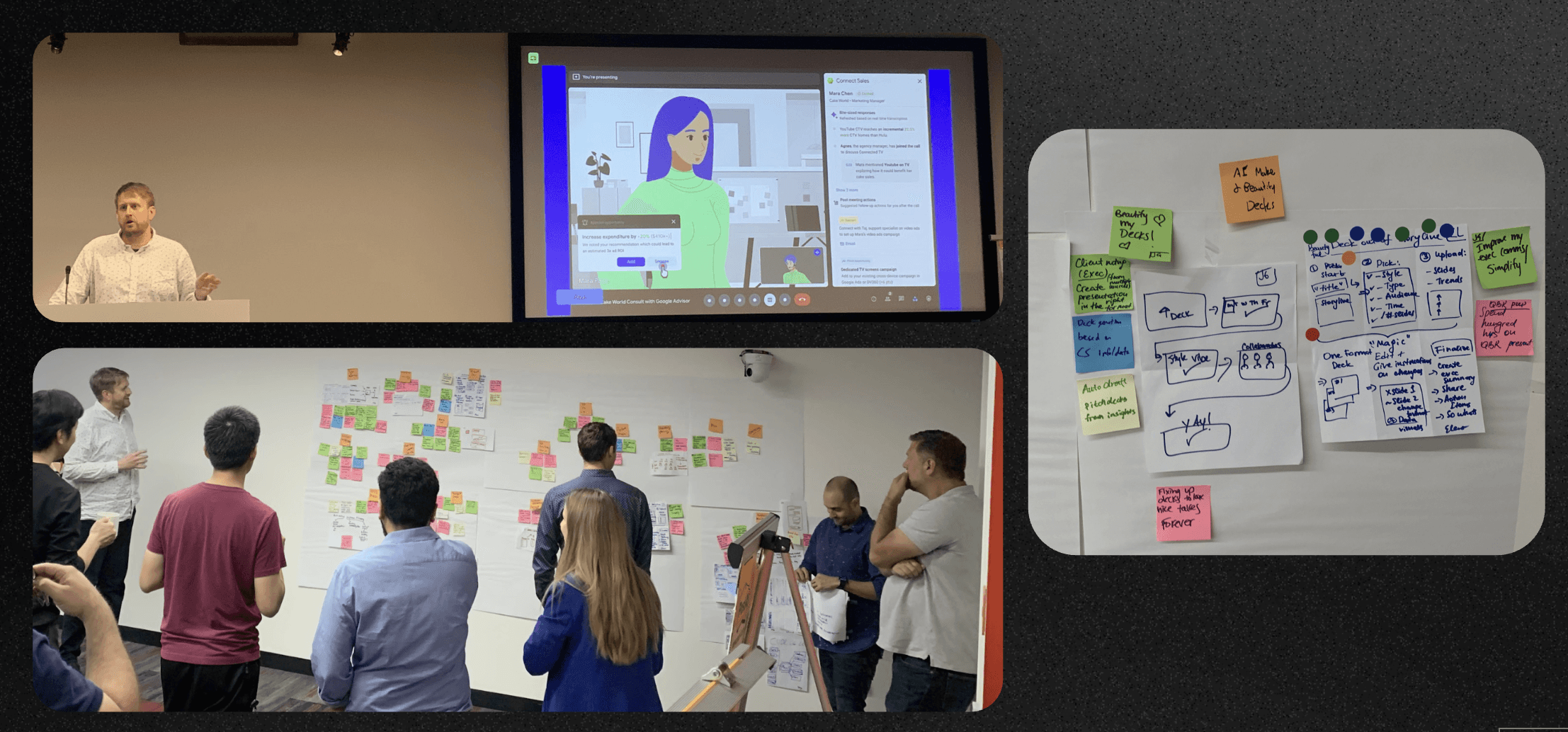
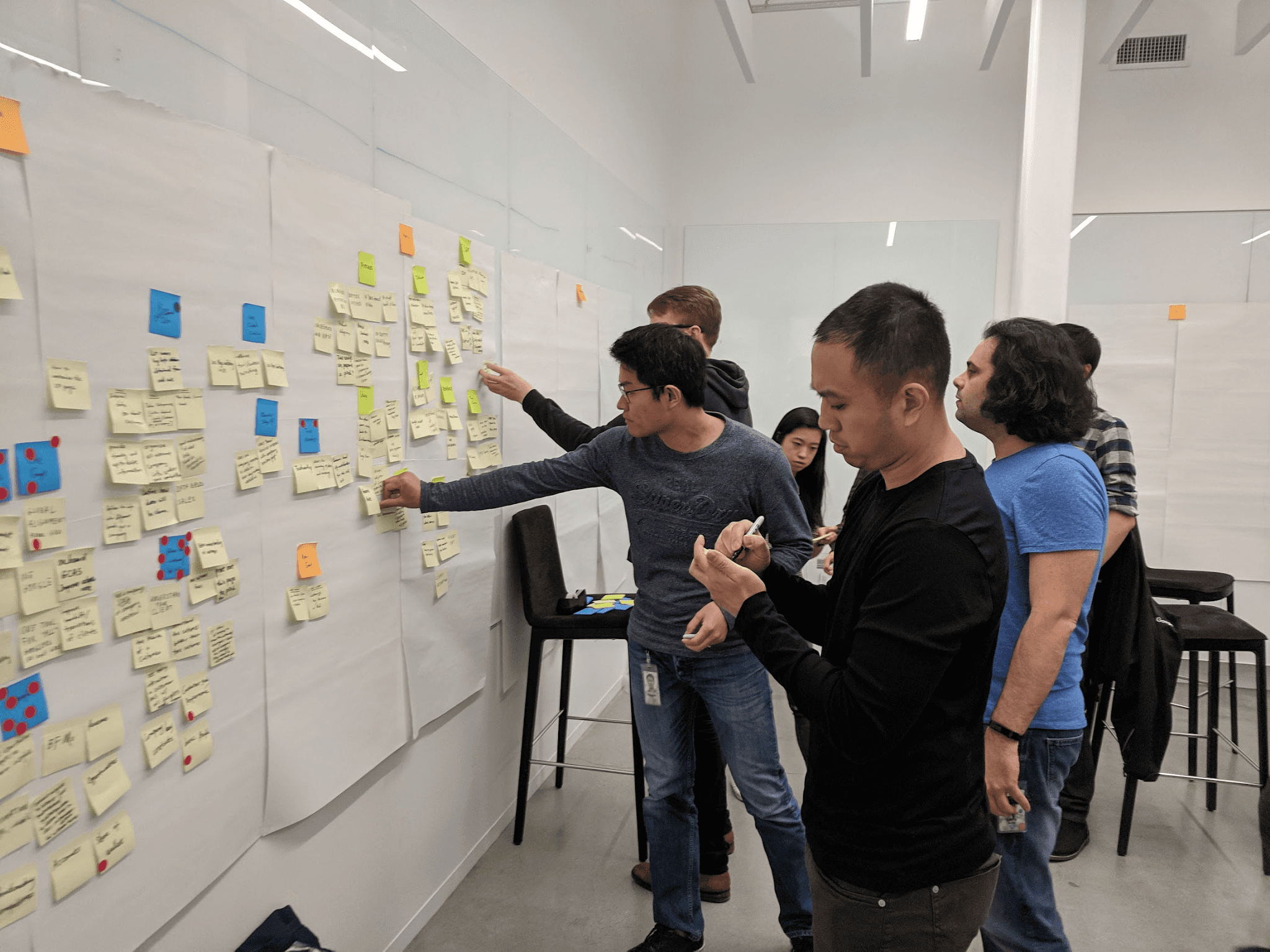
Exploring together: Finding overlapping project directions across Google, I fostered partnerships faciliating a 11+ team workshop bringing together DeepMind, Ads Platform, Ads Guide, Sales Intel, and Support Platform and Ecosystem partner teams to review learnings, ideate, and forge a unified 2026+ vision for new patterns, how AI insights and x-channel handoffs could work x-teams.
Investigations
To halt proliferation of fragmented AI experiences and define needs across enterprise teams, I created an overarching UXR plan, defined key questions, and rallied a tiger team across platforms to drive:
System explorations: I guided the team auditing 20+ cross-Google AI projects in a broad heuristic evaluation, finding inconsistencies and opportunities to align in naming, branding, explainability, and more. Our team dove deep on competitive analysis of other enterprise systems like Microsoft Copilot exploring patterns, copy, onboarding, explainability, feedback patterns, and more.
Data deep-dives: Our team analyzed millions Connect Sales sessions finding useful insights — for instance legacy feedback patterns (thumbs up / down) failed, with only hundreds of engagements, requiring new patterns to gather feedback and grow intelligence in an AI-first world.
Talking to global users: We planned, drove, ran, and synthesized 30+ international user interviews across EMEA to ground AI use-cases in real seller pain points. I led multiple vendor interviews in Barcelona, Dublin, and Singapore, synthesizing with senior PM partners to define largest needs.
Exploring together: Finding overlapping project directions across Google, I fostered partnerships faciliating a 11+ team workshop bringing together DeepMind, Ads Platform, Ads Guide, Sales Intel, and Support Platform and Ecosystem partner teams to review learnings, ideate, and forge a unified 2026+ vision for new patterns, how AI insights and x-channel handoffs could work x-teams.
The Enterprise AI UX Playbook
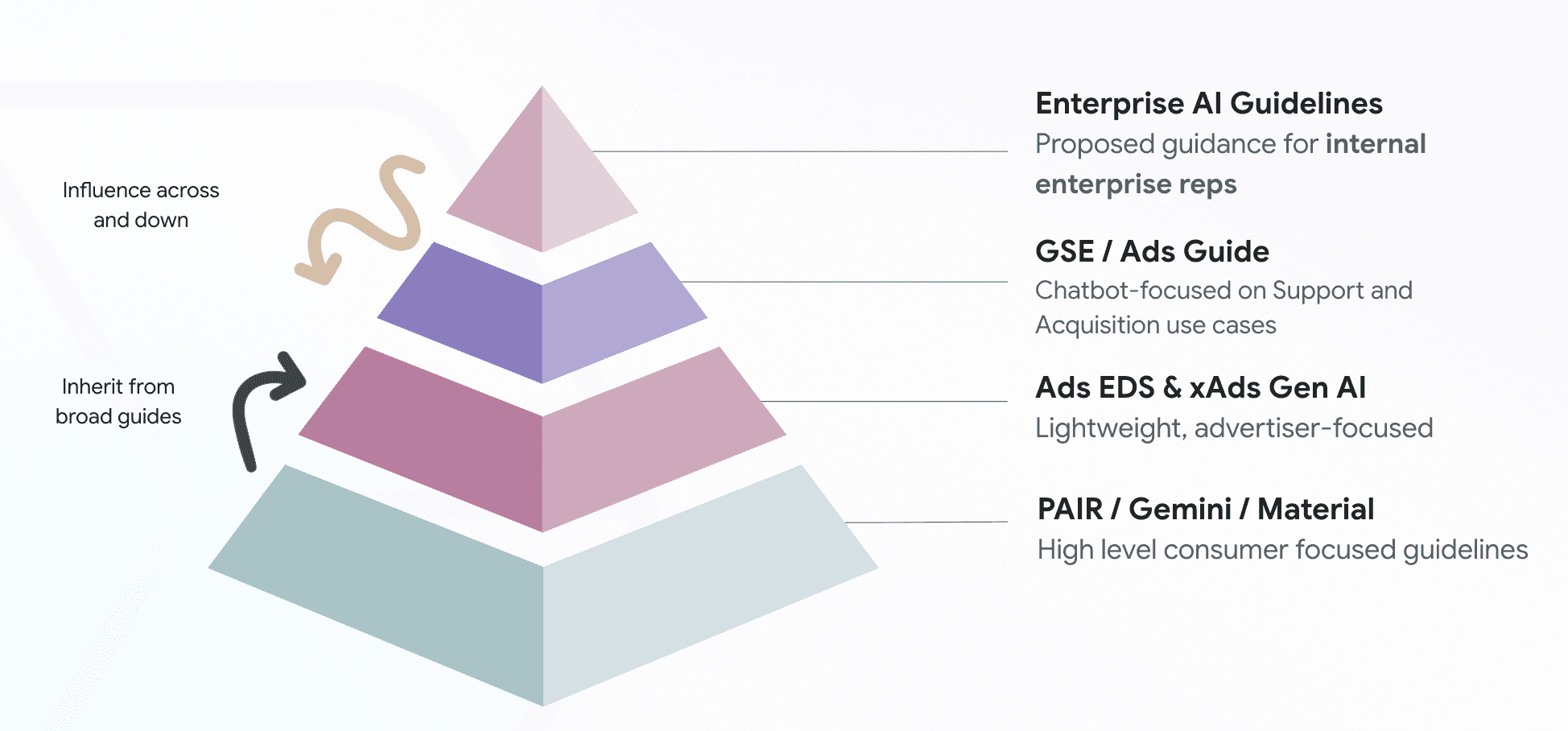
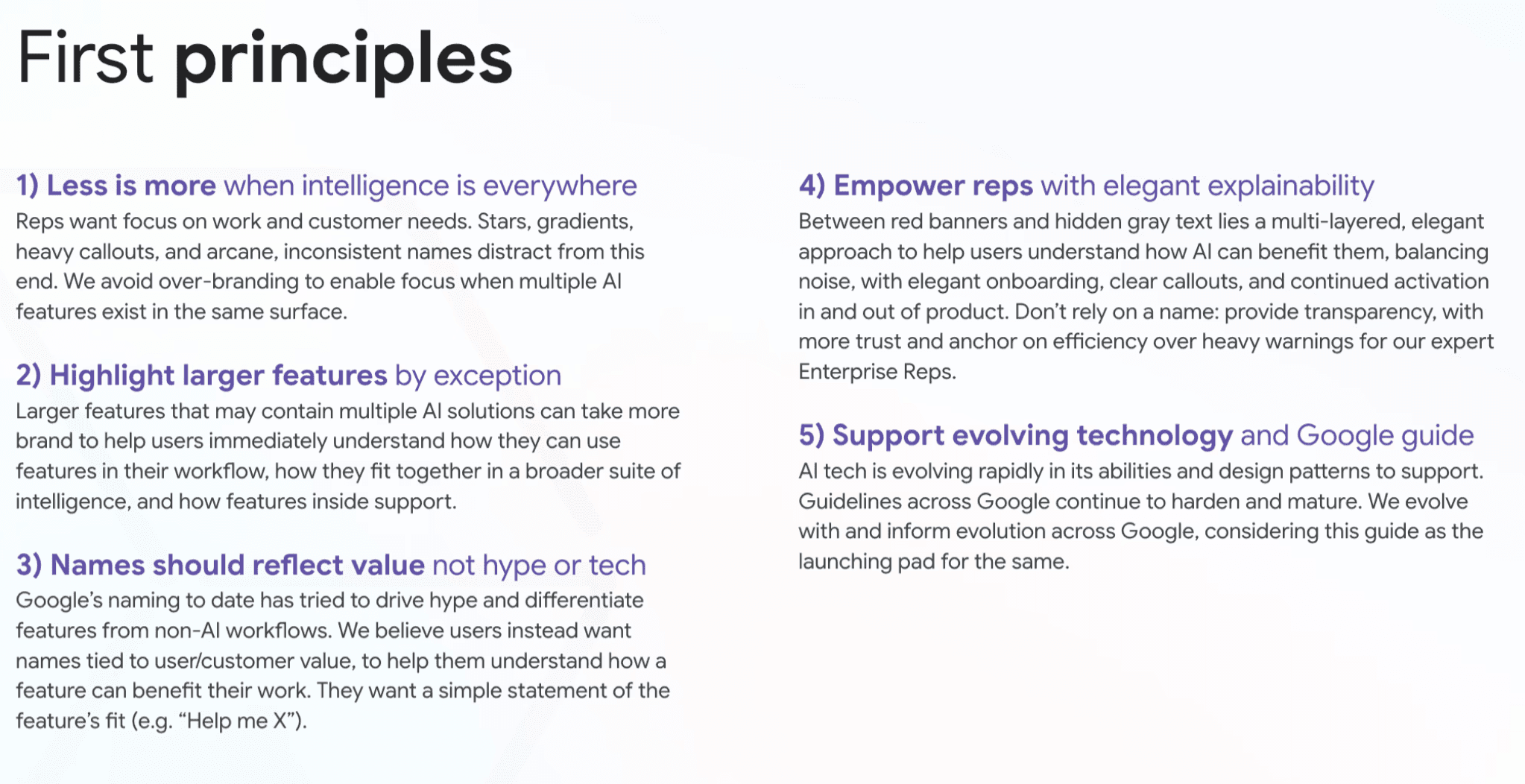
A principled approach: From our work we defined key principles, a focus on less is more when it comes to AI branding and positioning, to better highlight truly transformative experiences.
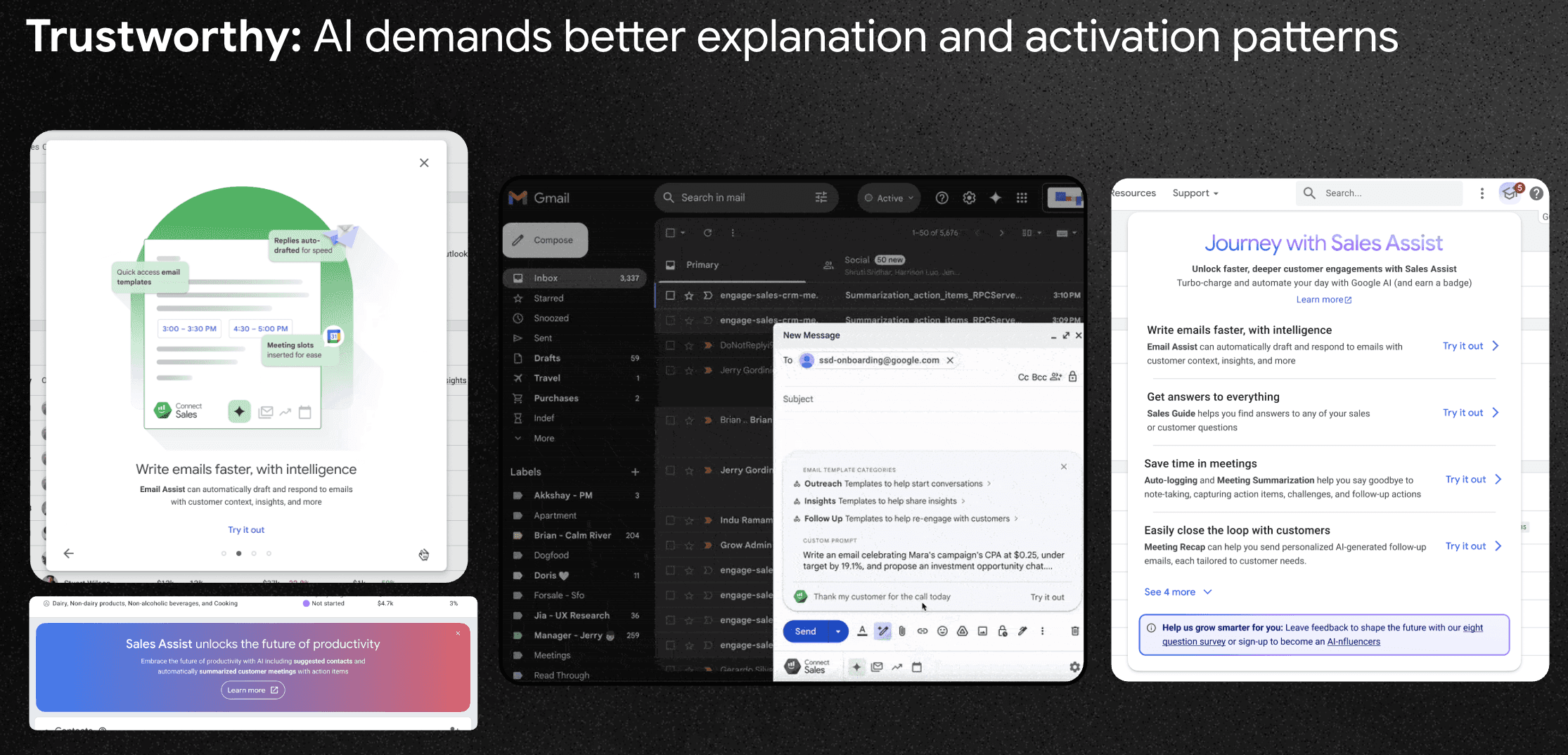
Trust-focused patterns to grow intelligence: We provided new patterns for contextual feedback loops that treated enterprise reps as experts, gathering granular feedback to improve models and their experiences. We established a multi-tier risk system for AI outputs that allowed us to flex how forward we put our disclaimers, balancing noise and signals
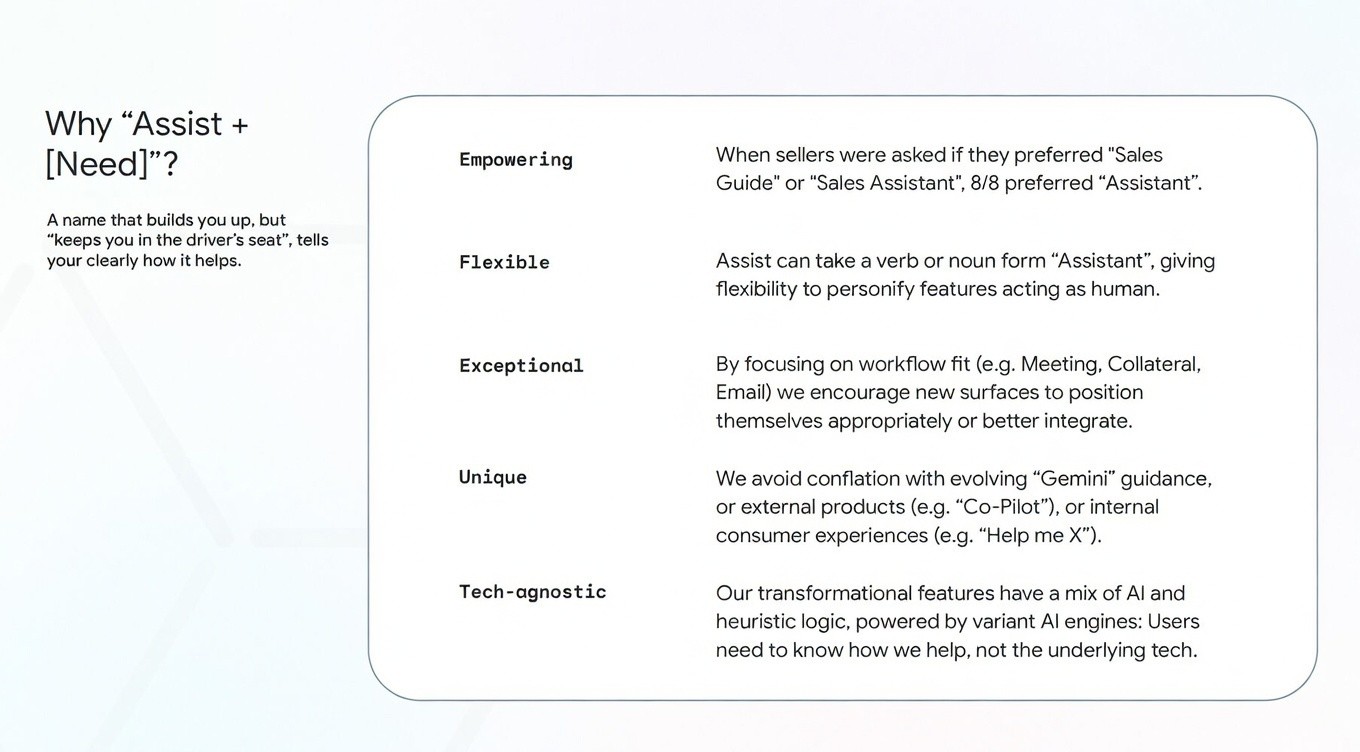
Unified naming to know what does what: By facilitating joint problem-solving sessions, our teams were able to consolidate our divergent product efforts under a unified "Assist" taxonomy, so sellers know how every feature fits in their workflow.
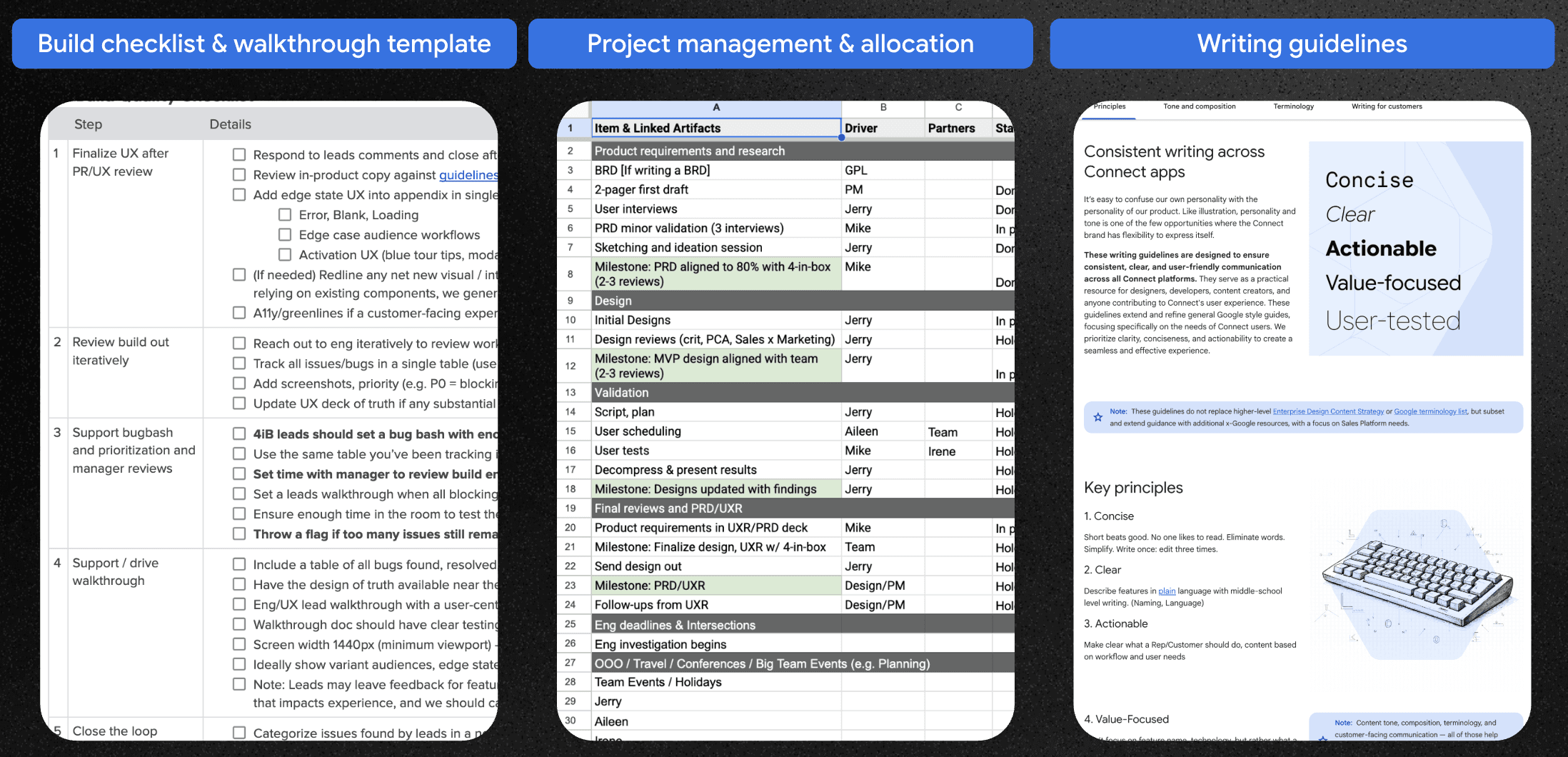
Process to make teams successful: In addition to UX patterns, we provided clear checklists for utilizing the playbook in a move-fast, AI-first world. We provided nascent writing guidelines and a new way of thinking about work, ensuring UX doesn't get left behind in faster cycles.
The Enterprise AI UX Playbook
A principled approach: From our work we defined key principles, a focus on less is more when it comes to AI branding and positioning, to better highlight truly transformative experiences.
Trust-focused patterns to grow intelligence: We provided new patterns for contextual feedback loops that treated enterprise reps as experts, gathering granular feedback to improve models and their experiences. We established a multi-tier risk system for AI outputs that allowed us to flex how forward we put our disclaimers, balancing noise and signals
Unified naming to know what does what: By facilitating joint problem-solving sessions, our teams were able to consolidate our divergent product efforts under a unified "Assist" taxonomy, so sellers know how every feature fits in their workflow.
Process to make teams successful: In addition to UX patterns, we provided clear checklists for utilizing the playbook in a move-fast, AI-first world. We provided nascent writing guidelines and a new way of thinking about work, ensuring UX doesn't get left behind in faster cycles.
The AI Product Suite
With governance and UX guidebook in place, I orchestrated research, design, and execution of the first AI-powered features suite, scaling and coaching a nascent team of six designers (averaging <2 years tenure) in this highly ambiguous 0-to-1 space. To protect focus during frequent reorgs and shifting targets, I socialized a 70/30 capacity allocation model of engagement with product, engineering, and business partners. I gave a talk on this model in 2020 if interested.
Under my direction, our team successfully delivered multiple AI-powered experiences, notably:
Assisted Emails: Our work for AI-powered emails rich with customer data helped drive low-touch sales to faster, more targeted customer outcomes. Impact: Reached 74% CSAT, assisting with ##% of all GCS seller emails—crushing low single-digit target.
Assisted Meetings: We pioneered real-time Google Meet integrations. The team designed a persistent sidebar that analyzes live transcripts to surface objection-handling metrics (e.g., YouTube vs. TikTok stats) mid-conversation. Impact: Increased efficiency by 50% across Meet workflows.
Sales Coaching: We transformed a localized coaching tool into a platform-wide engine, sharing extracted insights horizontally into Marketing Advisor to capture competitive threats and product sentiment. Impact: While in beta, Coaching was met with significant qualitative support from sales VPs and frontline at directing and upleveling skills.
Note: As these experiences are under NDA I cannot share UI publically, but happy to talk through UX iteration, choices, and my process 1:1
The AI Product Suite
With governance and UX guidebook in place, I orchestrated research, design, and execution of the first AI-powered features suite, scaling and coaching a nascent team of six designers (averaging <2 years tenure) in this highly ambiguous 0-to-1 space. To protect focus during frequent reorgs and shifting targets, I socialized a 70/30 capacity allocation model of engagement with product, engineering, and business partners. I gave a talk on this model in 2020 if interested.
Under my direction, our team successfully delivered multiple AI-powered experiences, notably:
Assisted Emails: Our work for AI-powered emails rich with customer data helped drive low-touch sales to faster, more targeted customer outcomes. Impact: Reached 74% CSAT, assisting with ##% of all GCS seller emails—crushing low single-digit target.
Assisted Meetings: We pioneered real-time Google Meet integrations. The team designed a persistent sidebar that analyzes live transcripts to surface objection-handling metrics (e.g., YouTube vs. TikTok stats) mid-conversation. Impact: Increased efficiency by 50% across Meet workflows.
Sales Coaching: We transformed a localized coaching tool into a platform-wide engine, sharing extracted insights horizontally into Marketing Advisor to capture competitive threats and product sentiment. Impact: While in beta, Coaching was met with significant qualitative support from sales VPs and frontline at directing and upleveling skills.
Note: As these experiences are under NDA I cannot share UI publically, but happy to talk through UX iteration, choices, and my process 1:1
Impact
By operating fluidly between high-level strategy, team coaching, and IC execution, my team and extended partners drove measurable success for Google Sales Platform, and Google more broadly:
Revenue & Cost savings: Our AI product efforts successfully landed driving $###M/yr in incremental proven via rigorous A/B testing, and ### headcount (HC) savings YTD 2025.
Unprecedented Adoption: The AI experiences achieved >90% weekly usage by sellers, driving an internal CSAT of 80%+ and a stat sig #%+ uplift in Advertiser CSAT.
Enterprise AI Design Scalability x-Google: Connect AI Playbook drove 40 distinct UX improvements across 10+ features, garnered 465+ cross-Google views, and directly influenced Google's broader Enterprise Design System.
New Channels to Pitch: Omnichannel Strategy was funded, integrating new 3P channels directly into Connect Sales CRM, unlocking a ~$#.#B Total Addressable Market.